Access Bars are 32 points on your head that, when gently touched, effortlessly and easily release the thoughts, ideas, beliefs, emotions, and considerations that stop you from creating a life you love
Access Bars are used as a potent and pragmatic tool by families, wellness practitioners, schools, businesses, mental health professionals, athletes, prisons, veterans, artists, and many more.
What is it like to receive an Access Bars session?
Access Bars® can feel like hitting the delete button on your computer’s cluttered hard drive – only this time, you’re creating space in your brain. Things like negative thought patterns, or that endless mental chatter keeping you awake at night, can be released and make space for the calm you’ve been seeking.
WHAT IS IT?
Access Bars in Business is a series of wellness programs that incorporates the dynamic Access Bars, a 30-minute light touch technique on the head that has similar effects to meditation. It provides deep relaxation, which can increase performance optimization and also prevent burnouts.
WHAT DOES ACCESS BARS DO?
The Access Bars quiets a racing mind, reduces stress, and gives the brain a replenishing space. This space encourages creativity, an increase in productivity, and the ability to harness one’s intuition and attention.
Google is upgrading its image-generation model with new editing chops, higher resolutions, more accurate text rendering, and the ability to search the web.
Dubbed Nano Banana Pro, the new model is built on Google’s latest large language model, Gemini 3, released earlier this week. The company claims Nano Banana Pro improves on its predecessor, Nano Banana, with the ability to create more detailed images and accurate text, and generate text in different styles, fonts, and languages.
The model also has web-searching capabilities, so you can do things like ask it to look up a recipe and generate flash cards.
Google says Nano Banana Pro is geared toward giving professionals more control over images, and lets users control aspects like camera angles, scene lighting, depth of field, focus, and color grading. And compared to Nano Banana’s resolution cap of 1024 x 1024px, users can generate 2K or 4K images with Nano Banana Pro.
The company noted that while Nano Banana Pro can generate images at a higher quality, it is slower and costlier than the original model, which cost $0.039 per 1024px image. Comparatively, the new model costs $0.139 for each 1080p or 2K image, and $0.24 for every 4K image.
The new model can use six high-fidelity shots or blend up to 14 objects within an image. It can also maintain consistency and resemblance of up to five people. The company has released a demo app where you can try some of these capabilities.
Nano Banana Pro is being rolled out across many of Google’s existing AI tools. The Gemini app will now use the new model to generate images by default, though users on the free subscription tier will be able to use the model to generate a limited number of images, after which they will be defaulted to the original Nano Banana model.
Google AI Plus, Pro, and Ultra subscribers will get higher-generation thresholds, though the company did not disclose the exact limits. These subscribers will also get access to the model within NotebookLM.
Google is also making the model available in search through AI mode for AI Pro and Ultra subscribers in the U.S. Ultra subscribers can access the model in the company’s video tool, Flow, and it is available to Workspace customers in Google Slides and Vids, too.
The company is also baking SynthID, its tech to watermark and detect AI-generated images, into the Gemini app. Users can upload an image, and the chatbot will tell them if the image has been created or modified by the company’s image models.
Google said that over time, it will include support for C2PA content credential detection for content verification.
EireBreeze delivers fresh, healthy air, energy savings, and smart living to homes and businesses across Ireland. We specialize in eco‑friendly ventilation, heat recovery, eco‑house development, smart home automation, and security solutions tailored for the Irish climate and lifestyle.
In Europe, Christmas markets are a classic staple of the holiday season. People sip warm, spiced drinks and sample tasty treats while browsing stalls filled with artisanal crafts. It’s a centuries-old tradition: The earliest known records of a Christmas market date back to 1296, when King Albrecht I of Hapsburg gave the citizens of Vienna permission to hold a Krippenmarkt (December market) during the weeks of Advent.
More winter markets followed. They became increasingly associated with Christmas in 1384, when the first Christkindlmarkt was held in Saxony (now Germany). These early Christmas markets mostly sold meat and other food items until the 16th century, when Martin Luther—the German Protestant who reformed Christianity across much of Northern Europe—brought the gift giving element to Christmas.
As gift giving on Christmas grew, so did the Christmas market. These larger, more festive affairs were filled with singing, dancing, and all sorts of and merriment. You’ll be hard pushed to find a European city that doesn’t host a Christmas market these days—here are 11 of the most enchanting ones.
Every year, your family and friends probably sit around debating whether Die Hard is a Christmas movie. After all, it takes place at Christmas, so it counts, right? But what about Lethal Weapon? Gremlins? Do you even remember that those movies are also set during the most wonderful time of the year?
In fact, there are quite a few movies that may not be the first ones you think of when it comes to a Christmas movie, but that may be because you’ve forgotten that the festive holiday season is the backdrop for action-packed thrills, rom-com vibes, or superhero surprises.
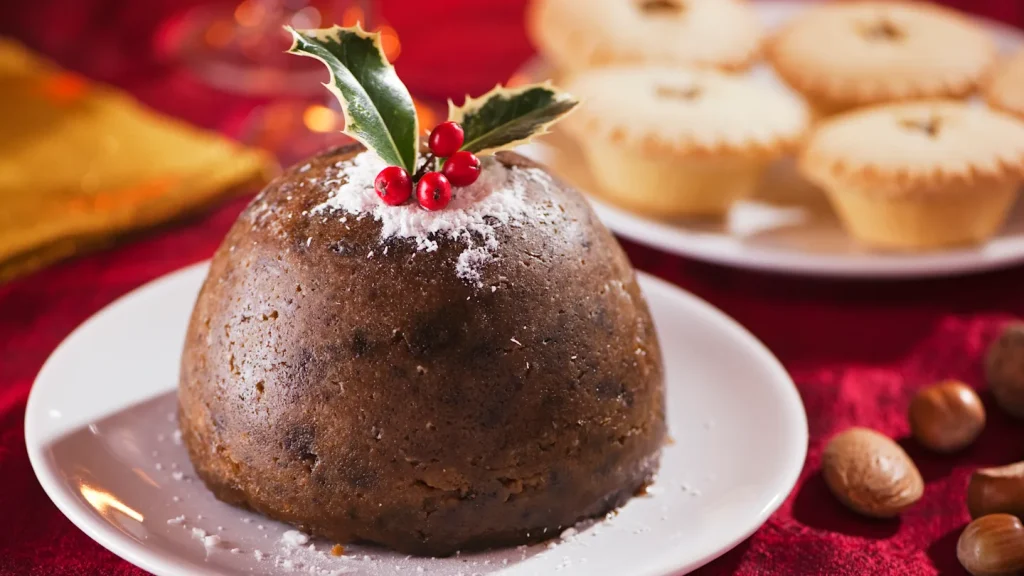
The dish, which is also known as figgy pudding or plum pudding, dates back to the Middle Ages. It didn’t contain what we call plums today, but might have been made with prunes, currants, and raisins (plum being the generic term for dried fruit). This mixture began life as a kind of pottage, a broth that was thickened with breadcrumbs, known as frumenty and served at the start of a meal.
Just as mince pies—another favorite festive sweet treat in the UK—used to actually contain minced meat, as opposed to the fruity, sugary mix known as “mincemeat” today, Christmas pudding often contained meat or meat stock. As frumenty evolved into more solid form, early puddings would consist of fruits, fat, and spices, mixed with grains and meat, and then be packed into intestines. According to anthropologist Kaori O’Connor, England’s involvement in the global spice trade during the reigns of Queen Mary I and Queen Elizabeth I made some of the pudding’s important ingredients more readily available to English citizens. The pudding became associated with Henry VIII’s famous royal feasts and an age of expansion.
O’Connor writes that in 1926, King George V and Queen Mary made sure to make it known that their own Christmas dinner would consist entirely of foods produced within the Empire. The king’s chef, André Cédard, created a special Christmas pudding recipe calling for currants from Australia, cut candied peel from South Africa, spices from India or the British West Indies, and even British beer. The Empire Marketing Board made the recipe for Empire Christmas Pudding available to the public, at home and overseas, to encourage purchase of foods from the colonies and steer consumer habits in a patriotic direction. (The Empire Marketing Board also made recommendations for Empire-produced canned salmon and lobster, apples, and honey.)
Traditions Today
The last Sunday before Advent is known as Stir-Up Sunday. While the phrase originally comes from the Book of Common Prayer, it has also become a day when families get together to prepare a Christmas pudding; each family member has a stir of the mixture, which some say leads to luck and unity in the year ahead.
In a nod to modern lifestyles, Christmas puddings no longer need to be boiled in cloth. Many people still committed to making a Christmas pudding from scratch use a pudding basin, a stoneware, metal, or heatproof plastic bowl specially designed for steaming. Some modern Christmas pudding recipes introduce a little more decadence to the classic; for example, Nigella Lawson’s version calls for soaking the dried fruits in Pedro Ximénez, a sweet and dark sherry, and serving with eggnog cream. The sprig of holly for decoration, as used by the fictional Mrs. Cratchit, remains common. And on the big day itself, the excitement of lighting the pudding—and possibly finding the lucky coin—makes for a memorable end to Christmas dinner.
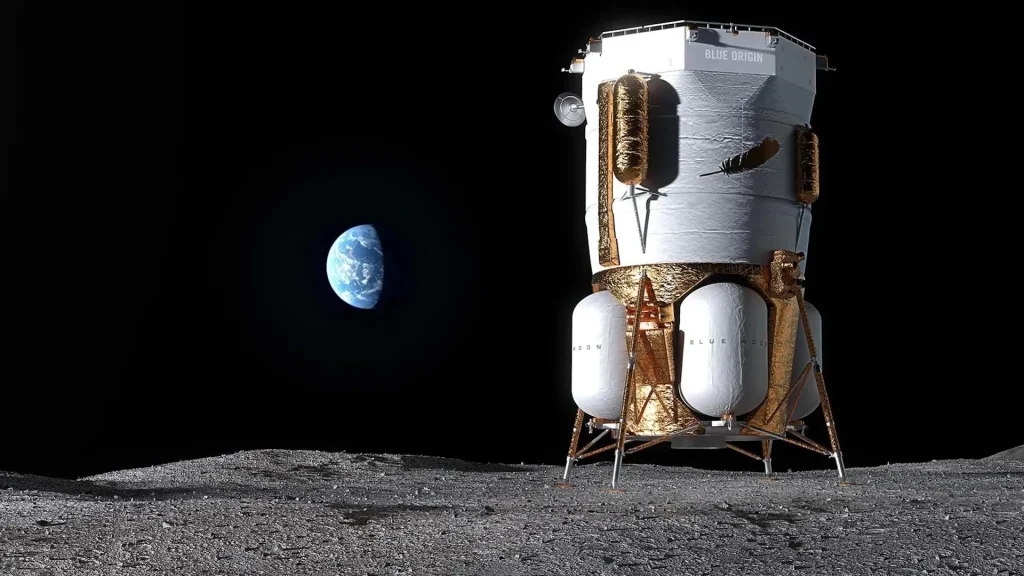
Blue Origin is closing out the year in style. Jeff Bezos’ private space company launched its first fully operational orbital New Glenn mission earlier this month. Now, it’s revealed its Mark 1 (MK1) lunar lander.
Jeff Bezos, the company’s founder and owner, shared a first look image of MK1 in an X post on Friday. Impressively, the lander is scheduled to fly to the Moon in early 2026. Once there, the uncrewed lander will touch down near the Shackleton crater at the Moon’s south pole.
Blue Origin famously filed a lawsuit against NASA after the space agency chose SpaceX’s Starship as its lunar lander. That lawsuit was struck down. Now, the tables seem to have turned. Blue Origin’s progress puts pressure on SpaceX, as the design of its own modified Starship lunar lander causes delays to NASA’s Artemis program.
MK1 is designed to launch aboard Blue Origin’s New Glenn rocket. It can carry a payload of up to 3.3 tons (3 metric tons) to the lunar surface. According to Bezos, the company will soon conduct “fully integrated checkout tests” of MK1 to prepare for the launch of Blue Moon Pathfinder in Q1 2026.
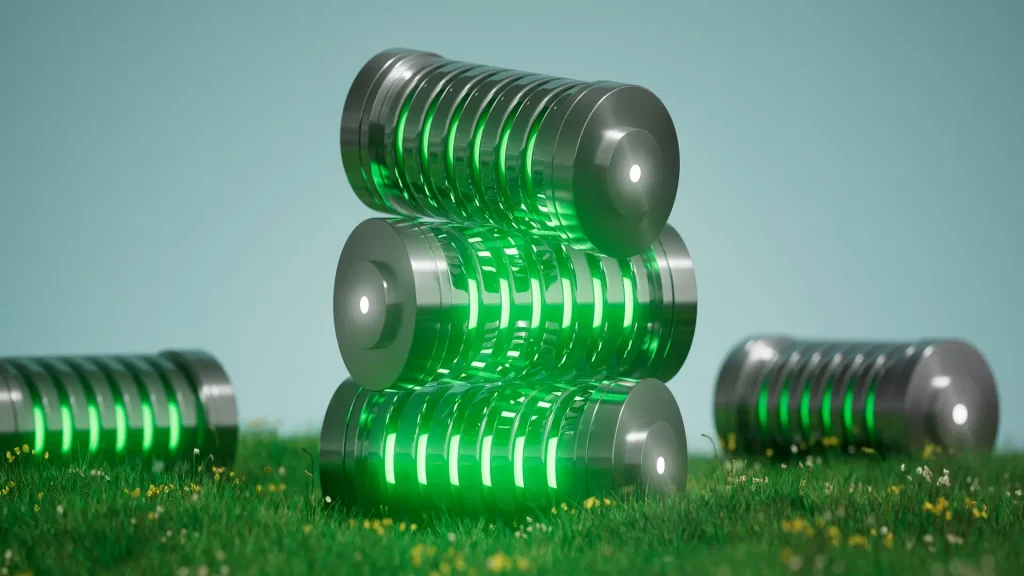
An eco-friendly battery made from lemon-like acids, gelatin, and biodegradable metals may soon power the next generation of wearables and medical implants.
Researchers at McGill University’s Trottier Institute for Sustainability in Engineering and Design have created a flexible, eco-friendly battery that bends, stretches, and naturally breaks down in the environment.
The design aims to reduce the massive battery waste generated by wearable devices.
“We use a lot of batteries in our lab for wearable devices, and they eventually stop working and get thrown out,” said research supervisor Sharmistha Bhadra, Associate Professor of Electrical and Computer Engineering.
“This project asked whether we could make something biodegradable and stretchable that still performs well.”
The team focused on replacing heavy-metal electrodes used in conventional batteries with biodegradable materials while boosting performance.
Acids solve bottleneck
Magnesium and molybdenum, which are commonly used in biodegradable battery concepts, degrade more easily than heavy metals but typically suffer from lower performance.
Earlier magnesium-based designs struggled with a reaction-blocking layer that formed on the metal, reducing voltage and lifetime.
To overcome that, the researchers turned to two naturally occurring acids: citric and lactic acid. When mixed with gelatin, the acids prevented the formation of that barrier and significantly improved output.
“Magnesium can generate a layer that stops the reaction between electrolyte and electrode,” explained doctoral student Junzhi Liu, who led battery development and testing.
The team also wired the battery to a pressure sensor as a real-world demonstration. It delivered about 1.3 volts, slightly below the 1.5 volts of a standard AA battery, but enough to operate wearable electronics.
“We wanted to see if we could run an actual wearable or sensor,” Bhadra said. “So Junzhi built a touch-sensitive device worn on a finger and powered by the battery.”
She noted that the design is well-suited for implantable medical devices, soft wearables, and potentially flexible IoT sensors.
The researchers are now seeking industry partners to advance the technology. Future steps include miniaturizing the design for implants, enhancing overall performance, and pairing the battery with fully biodegradable circuits.
“The whole motivation is to address the growing problem of electronic waste,” Bhadra said.
“If you go to a landfill, you see discarded electronics piled up for years. We are not very good about recycling; much of it ends up in lower-income countries. Maybe we can solve a part of the problem by developing biodegradable electronics.”
Immerse yourself in the festive spirit with this glorious celebration of music, featuring four remarkable settings of the Magnificat—by Bach, Tippett, Schütz and Monteverdi—each offering a unique interpretation of the timeless canticle of Mary.
Join the Goethe Choir for our annual Christmas celebration with special guests St. Mary’s Pro-Cathedral Girls’ Choir. Both choirs continue their tradition of presenting choral music of the highest calibre. From the intricate counterpoint and grandeur of Bach’s Baroque masterpiece to Tippett’s expressive 20th-century vision, this concert promises a rich and varied musical experience that honours both tradition and innovation.
These works offer a rich and varied reflection on the themes of joy, humility, and divine promise that lie at the heart of the Christmas story, featuring soloists: Aisling Kenny & Éadaoin Hassett (Sopranos), Francesco Giusti (Countertenor), Christopher Bowen & Patrick McGinley (Tenors) and Michael McCartan (Bass)