
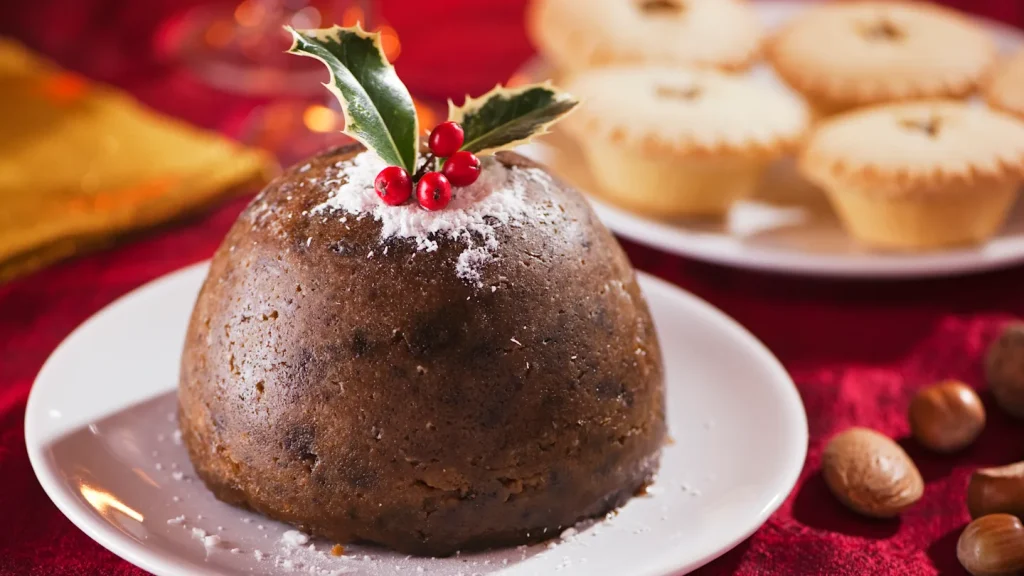
The Origins of Christmas Pudding
The dish, which is also known as figgy pudding or plum pudding, dates back to the Middle Ages. It didn’t contain what we call plums today, but might have been made with prunes, currants, and raisins (plum being the generic term for dried fruit). This mixture began life as a kind of pottage, a broth that was thickened with breadcrumbs, known as frumenty and served at the start of a meal.
Just as mince pies—another favorite festive sweet treat in the UK—used to actually contain minced meat, as opposed to the fruity, sugary mix known as “mincemeat” today, Christmas pudding often contained meat or meat stock. As frumenty evolved into more solid form, early puddings would consist of fruits, fat, and spices, mixed with grains and meat, and then be packed into intestines. According to anthropologist Kaori O’Connor, England’s involvement in the global spice trade during the reigns of Queen Mary I and Queen Elizabeth I made some of the pudding’s important ingredients more readily available to English citizens. The pudding became associated with Henry VIII’s famous royal feasts and an age of expansion.
O’Connor writes that in 1926, King George V and Queen Mary made sure to make it known that their own Christmas dinner would consist entirely of foods produced within the Empire. The king’s chef, André Cédard, created a special Christmas pudding recipe calling for currants from Australia, cut candied peel from South Africa, spices from India or the British West Indies, and even British beer. The Empire Marketing Board made the recipe for Empire Christmas Pudding available to the public, at home and overseas, to encourage purchase of foods from the colonies and steer consumer habits in a patriotic direction. (The Empire Marketing Board also made recommendations for Empire-produced canned salmon and lobster, apples, and honey.)
Traditions Today
The last Sunday before Advent is known as Stir-Up Sunday. While the phrase originally comes from the Book of Common Prayer, it has also become a day when families get together to prepare a Christmas pudding; each family member has a stir of the mixture, which some say leads to luck and unity in the year ahead.
In a nod to modern lifestyles, Christmas puddings no longer need to be boiled in cloth. Many people still committed to making a Christmas pudding from scratch use a pudding basin, a stoneware, metal, or heatproof plastic bowl specially designed for steaming. Some modern Christmas pudding recipes introduce a little more decadence to the classic; for example, Nigella Lawson’s version calls for soaking the dried fruits in Pedro Ximénez, a sweet and dark sherry, and serving with eggnog cream. The sprig of holly for decoration, as used by the fictional Mrs. Cratchit, remains common. And on the big day itself, the excitement of lighting the pudding—and possibly finding the lucky coin—makes for a memorable end to Christmas dinner.
Leave a Reply