
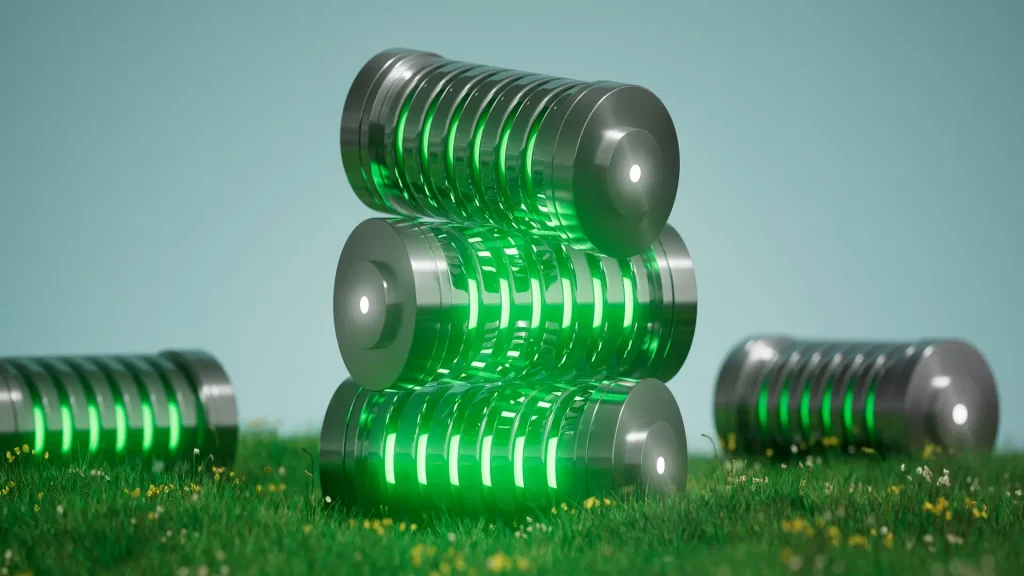
An eco-friendly battery made from lemon-like acids, gelatin, and biodegradable metals may soon power the next generation of wearables and medical implants.
Researchers at McGill University’s Trottier Institute for Sustainability in Engineering and Design have created a flexible, eco-friendly battery that bends, stretches, and naturally breaks down in the environment.
The design aims to reduce the massive battery waste generated by wearable devices.
“We use a lot of batteries in our lab for wearable devices, and they eventually stop working and get thrown out,” said research supervisor Sharmistha Bhadra, Associate Professor of Electrical and Computer Engineering.
“This project asked whether we could make something biodegradable and stretchable that still performs well.”
The team focused on replacing heavy-metal electrodes used in conventional batteries with biodegradable materials while boosting performance.
Acids solve bottleneck
Magnesium and molybdenum, which are commonly used in biodegradable battery concepts, degrade more easily than heavy metals but typically suffer from lower performance.
Earlier magnesium-based designs struggled with a reaction-blocking layer that formed on the metal, reducing voltage and lifetime.
To overcome that, the researchers turned to two naturally occurring acids: citric and lactic acid. When mixed with gelatin, the acids prevented the formation of that barrier and significantly improved output.
“Magnesium can generate a layer that stops the reaction between electrolyte and electrode,” explained doctoral student Junzhi Liu, who led battery development and testing.
The team also wired the battery to a pressure sensor as a real-world demonstration. It delivered about 1.3 volts, slightly below the 1.5 volts of a standard AA battery, but enough to operate wearable electronics.
“We wanted to see if we could run an actual wearable or sensor,” Bhadra said. “So Junzhi built a touch-sensitive device worn on a finger and powered by the battery.”
She noted that the design is well-suited for implantable medical devices, soft wearables, and potentially flexible IoT sensors.
The researchers are now seeking industry partners to advance the technology. Future steps include miniaturizing the design for implants, enhancing overall performance, and pairing the battery with fully biodegradable circuits.
“The whole motivation is to address the growing problem of electronic waste,” Bhadra said.
“If you go to a landfill, you see discarded electronics piled up for years. We are not very good about recycling; much of it ends up in lower-income countries. Maybe we can solve a part of the problem by developing biodegradable electronics.”
Leave a Reply